October 3, 2024
Philips helps healthcare organizations worldwide assess and mitigate their environmental impact while enabling better care and better care outcomes for more patients at lower cost
Amsterdam, the Netherlands – Royal Philips (NYSE: PHG, AEX: PHIA), a global leader in health technology, today announced significant greenhouse gas (GHG) emissions reduction results following collaboration with customers worldwide to assess and mitigate their carbon footprints, while also enhancing patient care and customer operational efficiency. Key achievements include:
- Jackson Health System (US): A 47% projected reduction in CO2e emissions by replacing legacy patient monitors, comprising 508-tons equipment lifecycle CO2e reduction and 177 tonnes CO2e reduction due to battery and paper savings.
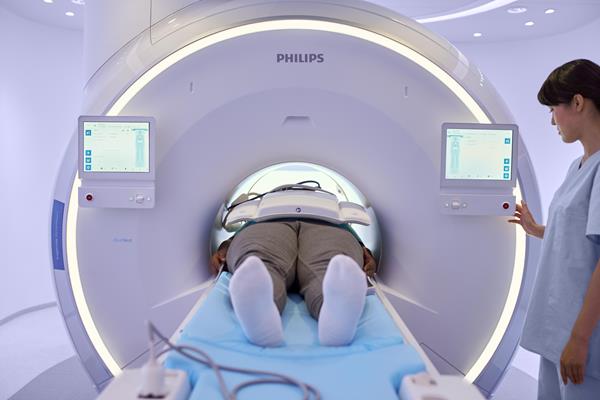
- Champalimaud Foundation (Portugal): 24% emissions reduction per exam in its radiology and nuclear medicine department, with a goal to halve the carbon footprint of its diagnostic and interventional imaging departments by 2028.
- Rennes University Hospital (France): Opportunities identified to reduce annual emissions of the cath lab through energy savings and sustainable equipment upgrades.
- County Durham and Darlington NHS Foundation Trust (UK): A sustainability blueprint developed for the trust's ICU, focusing on waste reduction and energy efficiency.
“Good healthcare has to be environmentally sustainable, which means words and good intentions urgently need to be turned into positive actions. Philips is committed to co-creating solutions that drive measurable, impactful change. By working with like-minded action leaders around the world, sharing with them our expertise in sustainable healthcare operations, we are helping them to take critical and tangible steps toward a greener future, while at the same time enhancing patient care,” said Robert Metzke, Global Head of Sustainability at Philips.
Examples of projects based on a comprehensive ‘360-degree' holistic life cycle assessment (LCA) of a hospital organization's sustainability, together with more detail about key results [1] include:
Jackson Health System (Miami, Florida, US)
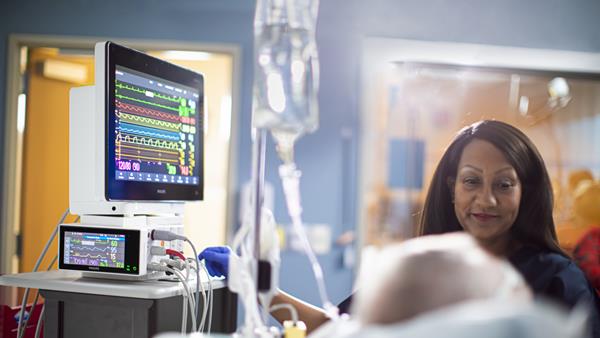
Philips conducted a retrospective Life Cycle Assessment of patient monitoring at 3 of Jackson Health System's hospitals revealing that by switching to the Philips monitoring platform from their previous provider, over a 10-year period, they may be able to reduce carbon emission from patient monitoring by 47%. Data from the LCA assessment indicated that the Philips IntelliVue and EarlyVue monitors can help reduce the health system's patient monitoring carbon footprint by 508 tons of CO2e across all facets of the lifecycle. Battery and paper savings reduced CO2e by an additional 177.1 tons. This significant reduction also eliminates the need for an estimated 420,000 disposable AA batteries and 6.5 million sheets of paper, which can allow the health system to save $1.2 million over a 10-year device lifetime.
Champalimaud Foundation (Lisbon, Portugal)
In March 2023, Philips and Champalimaud Foundation, a leader in translational biomedical research and clinical care, entered into a strategic partnership aimed at halving the carbon footprint of Champalimaud's diagnostic and interventional imaging departments by 2028. Potential reductions associated with equipment replacement and usage over the 5-year period were calculated and a replacement plan put into action. Based on a comprehensive LCA, the baseline carbon footprint of the existing imaging equipment was 2,175 tonnes CO2e. The collaboration achieved a 24% reduction in CO2e emissions per exam in the first year, primarily through EcoDesign equipment replacement and incorporating circular practices. Read the full case study here.
Rennes University Hospital (Rennes, France)
Part of a five-year technology, research, and innovation partnership, this project aimed to decarbonize and reduce the overall environmental impact of Rennes University Hospital's catheterization laboratory (cath lab), in which a Philips Image Guided Therapy System – Azurion – is used to treat strokes and aneurysms. Conducted in accordance with the latest European Union Product Environmental Footprint guidelines, a LCA of the carbon footprint and other pollutants associated with Azurion and the consumables used during interventional procedures revealed opportunities to reduce the lab's annual emissions through energy savings, circular upgrades, and refurbishment. The assessment also identified opportunities to reduce the rare metal content of equipment and consumables. Read the full case study here.
County Durham and Darlington NHS Foundation Trust (Darlington, UK)
Philips partnered with County Durham and Darlington NHS Foundation Trust (CDDFT) to identify key opportunities to reduce greenhouse gas emissions and materials waste in the intensive care unit (ICU) at Darlington Memorial Hospital. Key areas highlighted by the team for enhancing sustainable ICU care included patient discharge optimization, waste reduction in the supply chain, staff training to encourage knowledge sharing and a sustainability culture, energy reduction and materials waste associated with ICU equipment, and the strategic refurbishment of buildings to reduce their emissions. The results formed a blueprint to drive further change and improvement across the Trust, in line with the UK NHS's target of being the world's first net zero national health service by 2040. Read the full case study here.
Vanderbilt University Medical Center (Nashville, US)
In collaboration with leading sustainability experts at Vanderbilt University Medical Center, Philips collaborated in a LCA project to measure and mitigate emissions associated with an entire radiology department. The results revealed that 10-year emissions from Vanderbilt's current diagnostic radiology unit amounted to 4,600 tonnes CO2e, primarily associated with lifecycle emissions from its MR imaging suite (48%) and CT imaging suite (24%). Key mitigation recommendations for radiology departments included accelerating digitization, embracing circularity, and transitioning to renewable energy sourcing. Recommendations for health technology companies included designing for energy reduction, applying circular design principles, and developing smart image storage.
Philips is driving sustainable and equitable healthcare
Philips recognizes the link between human and environmental health, with healthcare systems responsible for over 4% of global CO2 emissions [2] and significant materials usage. As part of Philips' broader ESG commitments, Philips is driving the transition towards sustainable and equitable healthcare to deliver better care for more people. The company has been carbon neutral in its own operations since 2020. All new product introductions are designed in line with the company's EcoDesign requirements by 2025, and it aims to generate 25% of its revenue from circular products and services by 2025. Societally, it aims to improve the health and well-being of 2 billion people per year by 2025, including 300 million people in underserved communities, and 1 million workers in its supply chain.
[1] Results from case studies are not predictive of results in other cases.
- Jackson and Health System: The LCA results are obtained using Philips Environmental Profit & Loss (EP&L), proxy data, literature and customer obtained data. The LCA is not validated externally by 3rd party.
- Champalimaud Foundation and Rennes CHU: The LCA results are obtained using Philips Environmental Profit & Loss (EP&L), proxy data, literature and customer obtained data including energy measurements. The LCAs are validated externally by 3rd party.
[2] EDGAR—Emissions Database for Global Atmospheric Research Emissions Data and Maps 2018 http://edgar.jrc.ec.europa.eu/
For further information, please contact:
Joost Maltha
Philips External Relations
Tel: +31 6 10 55 8116
Email: joost.maltha@philips.com
About Royal Philips
Royal Philips (NYSE: PHG, AEX: PHIA) is a leading health technology company focused on improving people's health and well-being through meaningful innovation. Philips' patient- and people-centric innovation leverages advanced technology and deep clinical and consumer insights to deliver personal health solutions for consumers and professional health solutions for healthcare providers and their patients in the hospital and the home. Headquartered in the Netherlands, the company is a leader in diagnostic imaging, ultrasound, image-guided therapy, monitoring, and enterprise informatics, as well as in personal health. Philips generated 2023 sales of EUR 18.2 billion and employs approximately 69,700 employees with sales and services in more than 100 countries. News about Philips can be found at www.philips.com/newscenter.
- 广州四维营销:会议会务全托管,让企业招商会 “落地即成交”
- 平安人寿联合复旦大学重磅发布《新纪元·新价值:迎接黄金发展期》寿险行业白皮书
- 2025亚洲国际音乐大赛新加坡总决赛颁奖典礼精彩纷呈
- 十一度蝉联保险业第一!BrandZ《最具价值中国品牌100强》发布:中国平安位列中国品牌第九
- 3岁女童总爱凑近皱眉看人,检查竟非近视,而是得了“老年病”——福州爱尔眼科
- 2025上海别墅装修公司有哪些?高性价比推荐:1299 元 /㎡享品质装修
- 千金药业:1.5亿智能车间圆满封顶 女性健康产业升级加速
- 林华寿独创道家古法疗法攻克三尸虫取得重大突破
- 新愿景,新启航!研华加速从IPC迈入边缘计算新时代
- PIK3CA基因检测助力乳腺癌精准治疗新篇章
- 伽澜健康助力黄河金三角区域医疗机构临床营养学科建设论坛圆满举办
- 立屯精神聚合力 政企共建助振兴—中国人寿财险广西分公司联合天等县开展主题党日活动
- 《StellarSugar》12强选手惊现韩国最大中餐厅:燕京大饭店
- 有梦有方向 青春正飞扬 “青春影像”校园歌手征集最终展示活动将在重庆举办
- 山东双嘉家庭教育走进历城一中:开展心理讲座赋能青春梦想